


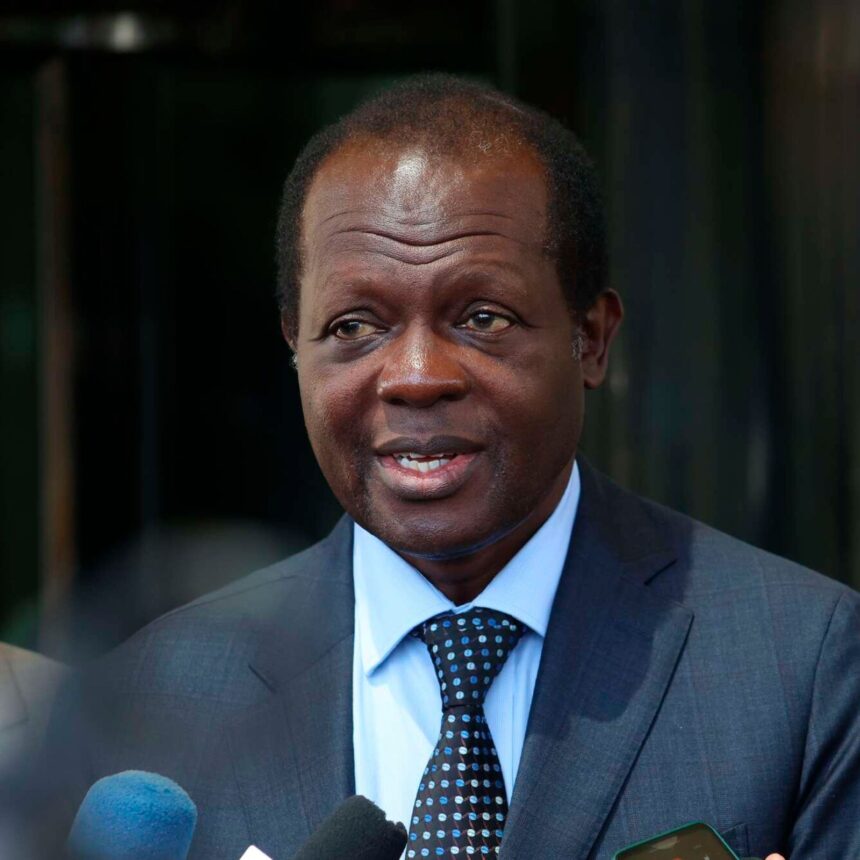
The High Court in Nairobi has dismissed a constitutional petition by Joseph Kimani Wachira challenging his arrest and the Ethics and Anti-Corruption Commission’s (EACC) investigation into allegations of bribery involving former Cabinet Secretary Raphael Tuju.
In a judgment delivered on October 7, 2026, Justice Joseph Kipkoech Biomdo ruled that Wachira had not established sufficient grounds for the court to stop the investigations or interfere with the investigative process.
The court also vacated the interim orders that had been issued in the case and directed Wachira to pay the costs of the petition.
How the Dispute Began
Wachira told the court that he was approached in February 2026 by Okiri Thomas Awili, who asked him to meet Tuju over a possible legal brief relating to property disputes pending before the High Court’s Commercial and Tax Division.
According to Wachira, he attended three meetings with Tuju at Entim Sidai Wellness Sanctuary in Karen, with the final meeting taking place on March 9, 2026.
He said the meeting followed an adverse ruling against Tuju in Milimani High Court Commercial Case E636 of 2024.
Wachira maintained that Tuju placed Ksh 1 million in cash on the table without any prior demand or discussion about a bribe.
He told the court that he did not take the money but stepped outside to retrieve a notebook from a waiting vehicle, where EACC officers arrested him on allegations of soliciting a bribe.
Wachira was detained overnight and released the following day on Ksh 200,000 cash bail.
He argued that the arrest was part of an entrapment scheme and that the recording of the incident was unlawfully leaked to the public, damaging his reputation.
EACC Defended Its Investigation
The EACC disputed Wachira’s account, telling the court that Tuju had reported an alleged demand for Ksh 10 million involving Wachira, Awili and former High Court judge Joseph Mutava.
According to the commission, the money was allegedly intended for a sitting High Court judge to secure a favourable ruling in the commercial dispute involving Tuju’s properties.
The commission said it began investigations after receiving Tuju’s complaint on March 9, 2026.
It told the court that officers briefed Tuju on using an audio-visual recording device, provided him with treated money and accompanied him to the meeting.
The EACC said Wachira and the other individuals were arrested after Tuju signalled officers, who recovered the treated money from the villa.
Tuju denied conspiring with investigators to frame Wachira, while the Office of the Director of Public Prosecutions and the Attorney-General opposed the petition, arguing that the allegations involved disputed facts that should not be determined prematurely.
Court Finds No Basis to Stop Investigations
In determining the petition, the court examined whether the EACC had acted unlawfully or abused its investigative powers.
Justice Biomdo found that the commission had received a complaint and commenced investigations within its statutory mandate.
The judge said there was no evidence establishing that the EACC had acted illegally or participated in the alleged scheme against Wachira.
The court also considered a statutory declaration by Awili that supported Wachira’s account of an alleged setup.
However, it held that the conflicting accounts presented factual disputes that required proper evaluation at trial rather than determination at the investigative stage.
The judge further observed that recording evidence during a bribery investigation was not inherently illegal or inadmissible.
Court Declines to Rule on Fair-Trial Claims
Wachira also argued that the alleged leaking of recordings violated his constitutional rights, including his rights to dignity, privacy and a fair hearing.
The court found that determining whether the disputed evidence would compromise the fairness of a trial was premature because the matter remained at the investigative stage.
It held that the admissibility of such evidence should be determined by the trial court if criminal charges were subsequently brought.
On privacy, the judge found that the seizure of Wachira’s mobile devices was lawful and that a court warrant had authorised the extraction of information from the devices.
The court concluded that Wachira had failed to demonstrate a constitutional violation warranting the orders he sought.
Consequently, the petition was dismissed, the interim orders were vacated, and Wachira was ordered to bear the costs of the proceedings.