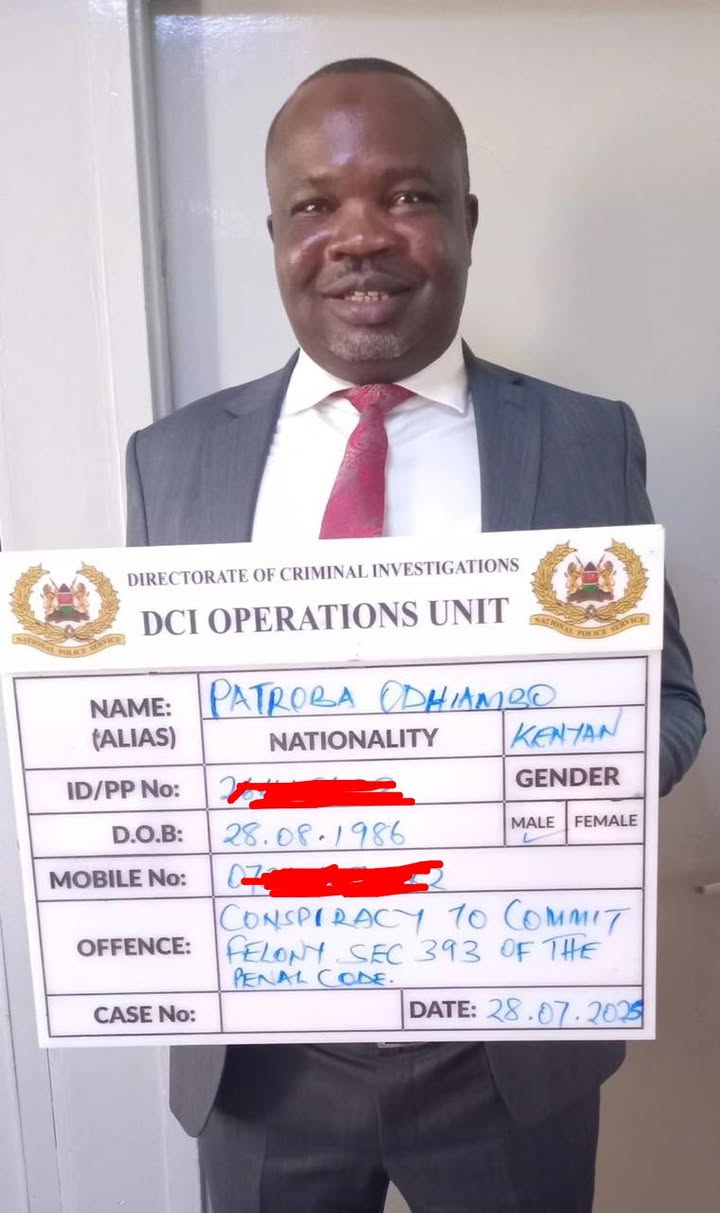
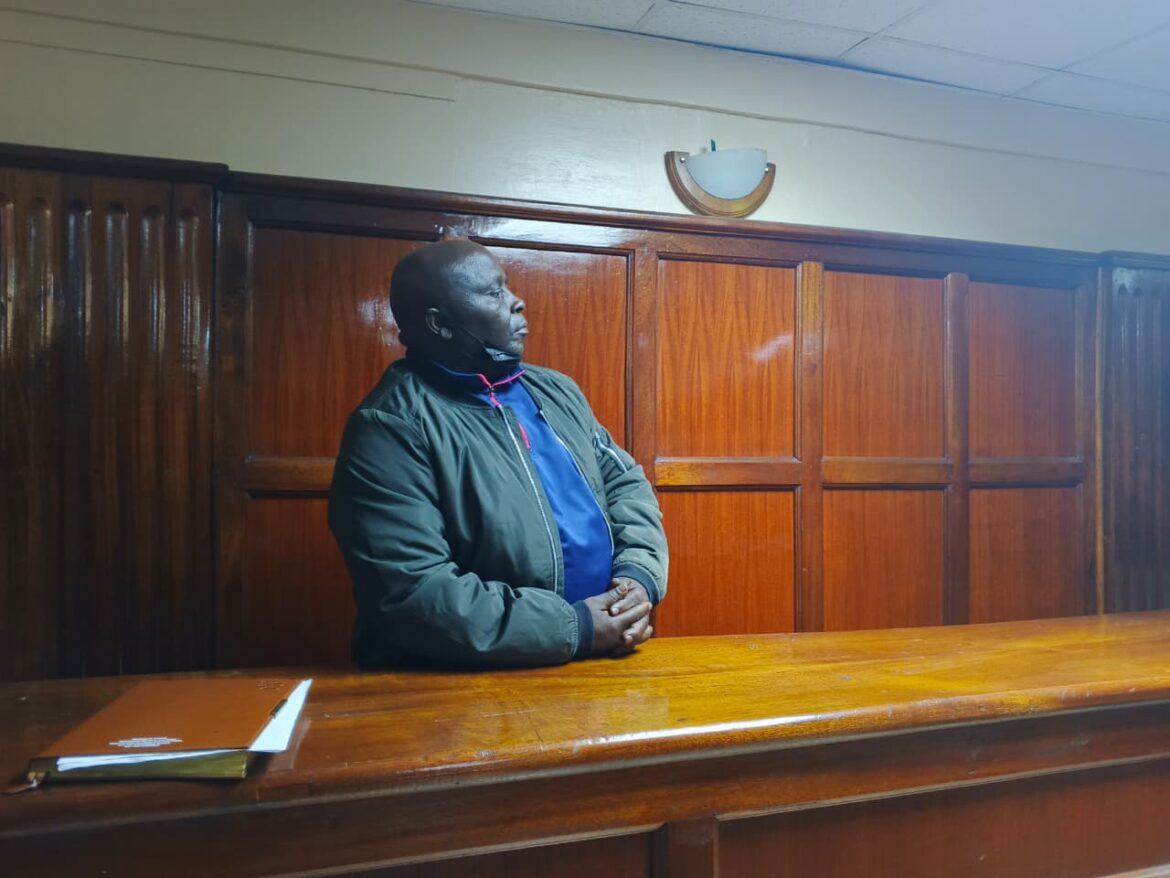
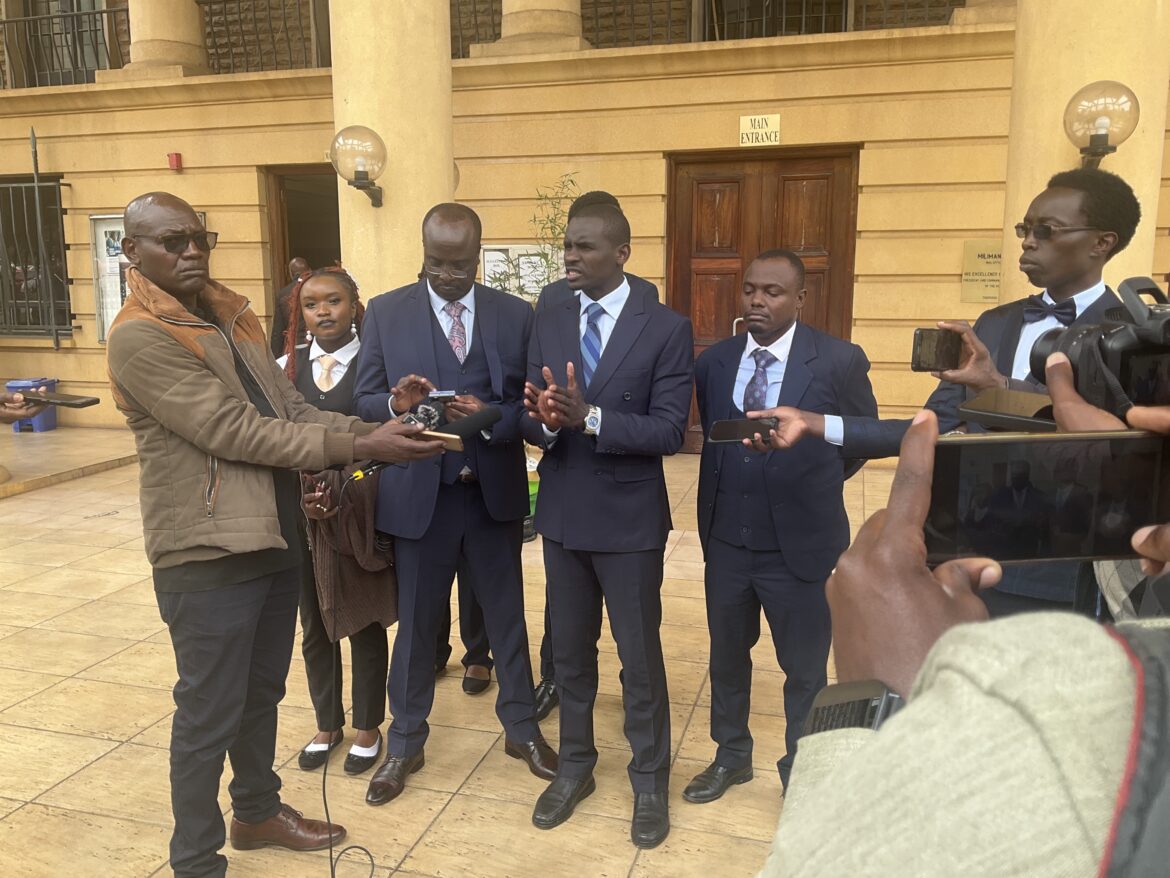
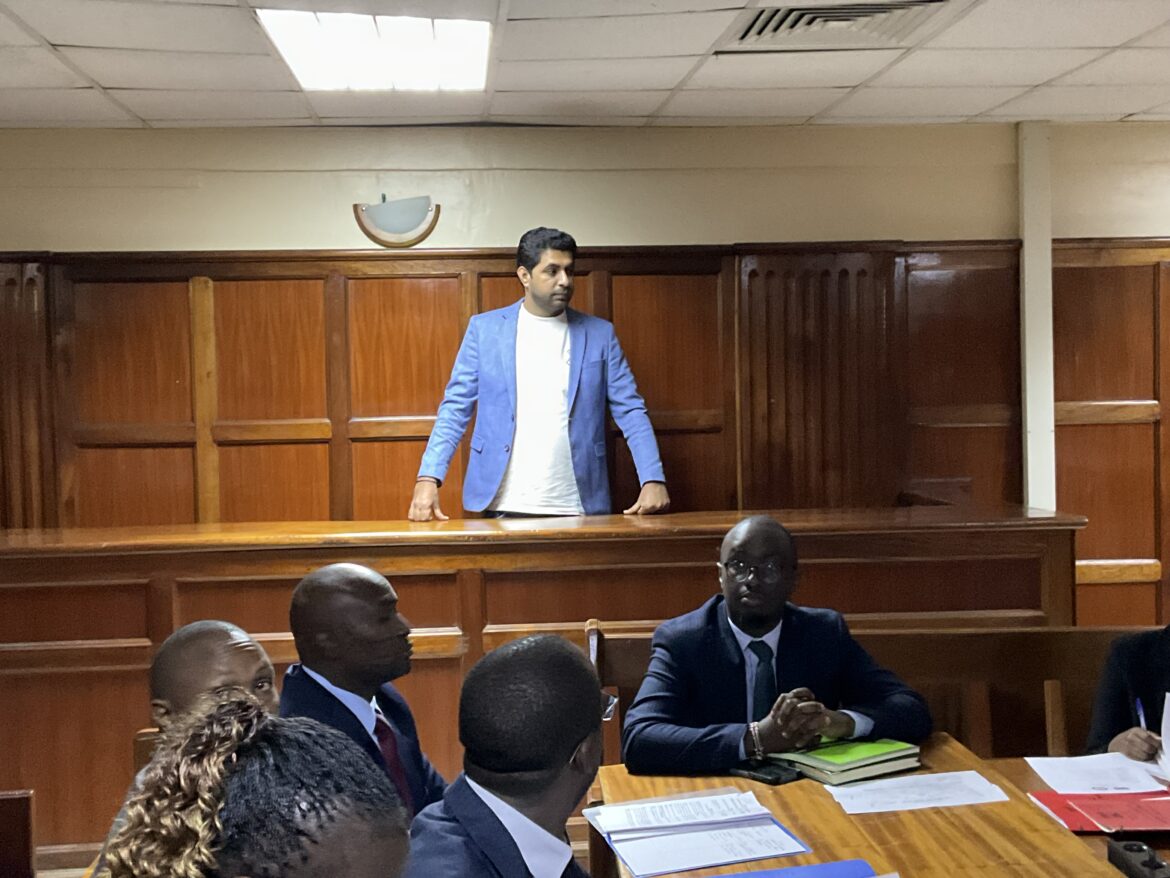
The two Benson Odero Gembe anf Emmaculate Adhiambo Odhuno appeared before magistratre Dolphina Alego and denied the charges.
They were charged that on diverse dates between August 24,2024 and October 19,2024 at Nairobi,jointly with others not before court st Nairobi City,jointly with others before court,conspired to defraud M/S Sonali Purbia Malviya and Mohammed Adel sum of USD 54,300 by falsely pretending that they were in a position to sell to them 35 kilograms of gold bars,knowing it was untrue.
They were charged in another count of obtaining money by false pretences contrary to the law.
Through their lawyer Collins Alio,Odero and Adhiambo were charged with obtaining the money by false pretences.
They pleaded with the court to be released on favourable bond terms saying that the lady is a mother with young children.
They were detained till September 14,2025 when the court will make determination on bond.
Lilian Wangui Odwoma Alias Lilian Weru has appeared before magistrate Dolphina Alego and denied the charges.
Court was informed that on the doverse dates between May 6, 2024 and May 20,2024 in Westlands area,conspired with others not before court to defraud Elizabeth Wanjiku Muigai USD 50,000 and Sh 30,000,000.
She is said to have pretended to be in a position to help the complainant secure a standby letter of Credit from Pacific Concord International FZC based in Dubai,knowing it was untrue.
Wangui faced two more counts of Acquisition of proceeds of crime and use.
Through lawyer John Swaka, the accused pleaded for liniency saying she is ailing.
Court will determine her release next week.
The two Benson Odero Gembe anf Emmaculate Adhiambo Odhuno appeared before magistratre Dolphina Alego and denied the charges.
They were charged that on diverse dates between August 24,2024 and October 19,2024 at Nairobi,jointly with others not before court st Nairobi City,jointly with others before court,conspired to defraud M/S Sonali Purbia Malviya and Mohammed Adel sum of USD 54,300 by falsely pretending that they were in a position to sell to them 35 kilograms of gold bars,knowing it was untrue.
They were charged in another count of obtaining money by false pretences contrary to the law.
Through their lawyer Collins Alio,Odero and Adhiambo were charged with obtaining the money by false pretences.
They pleaded with the court to be released on favourable bond terms saying that the lady is a mother with young children.
They were detained till September 14,2025 when the court will make determination on bond.
The usually restrained halls of the Milimani Commercial Courts are bracing for a high-profile defamation battle that could test the limits of free speech in Kenya’s social media age.
In case MCCC E5724 of 2025, prominent Nairobi advocate Cecil Guyana Miller has sued political commentator Nelson Amenya over a viral post on X (formerly Twitter) that accused Miller’s firm of siphoning millions from the Kenya Union of Savings and Credit Co-operatives (KUSCCO).
Miller, a 29-year veteran of the legal profession and Managing Partner at Miller & Company Advocates, says the August 12, 2025, post was “false, malicious, and calculated to destroy my professional reputation.” The suit, filed through P.W. Wena & Co. Advocates, seeks damages, an injunction, and the removal of the post.
The contested tweet, titled “UPDATE; VIPINDIREE at KUSCCO”, alleged that Miller’s firm had “siphoned more than KSh 30 million” from KUSCCO through representation in “dubious cases,” and that advising on a PricewaterhouseCoopers report would cost the embattled union another KSh 20 million.
“For an entity allegedly KSh 12 billion in the red,” Amenya wrote, “this is a financial comedy.”
The post formed part of a broader thread on alleged mismanagement and corruption at KUSCCO, touching on asset stripping, political interference, and conflicts of interest. But Miller insists the references to him and his firm are wholly untrue. “I have built my career on integrity and competence,” he said outside court. “To suggest that I am involved in corruption without a shred of evidence is reckless and deeply damaging.”
In court papers, the plaintiff claims the accusations painted him as “dishonest, corrupt, unprofessional, and unfit to practise law.” He says the post sparked embarrassment among clients and staff, forcing him to cancel meetings, and that it even included confidential correspondence between his firm and KUSCCO without consent.
According to the suit, the alleged malice is clear:
“We wrote to him the very same day, asking for an immediate retraction,” Miller’s lawyer told reporters. “He ignored it and instead allowed the post to continue circulating, damaging my client’s standing in the legal community.”
Miller’s evidence includes a copy of the disputed post, the demand letter, KUSCCO retainer agreements, fee notes, and internal memos showing agreed fees for debt recovery and representation.
For his part, Amenya has not yet filed a defence. However, in the original thread, he questioned why “an allegedly insolvent union could afford multi-million-shilling legal and consultancy fees” and accused unnamed parties of “using investigations as cover for insider enrichment.”
The case has sparked national interest, not only for the reputations at stake but for its potential to define how far Kenyans can go in naming individuals in public-interest social media posts.
“This case is a litmus test,” said Nairobi media lawyer Peter Otieno, who is not involved in the matter. “It sits right at the intersection of two competing principles, freedom of expression and protection of reputation, and the outcome will be watched closely by journalists, activists, and public figures alike.”
Under Kenyan law, truth is a defence to defamation, but defendants must prove the truth of their statements, a challenge in corruption-related claims where official records can be hard to access. At the same time, courts have increasingly recognised that public-interest reporting, particularly on governance, must not be silenced by punitive lawsuits.
“If I win,” Miller told the press, “it will send a message that you cannot defame professionals under the guise of whistleblowing. Facts matter.”
Some online commentators disagree. “This is about transparency,” one cooperative sector activist posted. “If citizens fear lawsuits every time they expose corruption, we will never clean up our institutions.”
The first hearing is expected later this month. Until then, the case continues to divide public opinion between those who see a respected lawyer defending his name and those who believe it is a warning shot to citizen watchdogs in the age of viral allegations.
The sterile air of Nairobi’s Milimani Law Courts was thick with tension yesterday as a case unfolded that could redefine the balance of power within Kenya’s security apparatus. In a petition that reads like a constitutional drama, Sheria Mtaani na Shadrack Wambui accused the top brass of the police of “hijacking” a critical human resource function, the payroll.
“This is not just about salaries,” Wambui told reporters outside the courtroom, his voice rising over the hum of onlookers. “It’s about the soul of police governance, the checks and balances that keep this country from sliding into chaos.”
At the heart of the legal battle is a question with profound implications: Who should control the payroll of the National Police Service?
On one side is the Inspector-General of Police, the 1st Respondent, accused of unilaterally managing payroll operations in defiance of constitutional provisions. On the other hand stands the National Police Service Commission (NPSC), constitutionally mandated to oversee recruitment, promotions, transfers, and discipline. The Petitioner argues that payroll administration is not a clerical detail—it’s a lever of power.
“Control the payroll, and you control people’s lives,” reads one section of the petition, drawing gasps from members of the press who had managed to get their hands on a copy.
Wambui painted a grim picture of the risks, warning that unchecked control could lead to the alteration or deletion of payroll data to punish dissenting officers or reward loyalists. “Imagine an officer interdicted for corruption,” he said, “only to continue receiving pay because the payroll was quietly edited. Or worse, a whistleblower suddenly finding themselves erased from the system.”
The stakes, he argued, go beyond accounting software. They cut to national security stability, public trust, and the integrity of constitutional governance.
Inside the court, lawyers for the Petitioner argued that the dispute is no mere bureaucratic turf war. Article 246(3) of the Constitution, they said, clearly places human resource management including payroll under the NPSC’s domain. Article 245, on the other hand, gives the Inspector-General operational command, but not the administrative purse strings.
“This is the kind of constitutional ambiguity that, if left unchecked, will fester into institutional rot,” Wambui told the judge. His tone was calm, but the warning was unmistakable.
The urgency of the matter was underscored by recent events. Weeks ago, the National Assembly’s Public Accounts Committee publicly ordered the Inspector-General to hand over payroll functions to the NPSC. The directive was met with defiance, setting the stage for a high-stakes showdown.
“There’s a risk here of a silent coup within the police service,” Wambui said after the hearing, “where one office consolidates both the sword and the purse.”
The petition seeks conservatory orders to freeze any payroll changes until the court resolves the matter. This, Wambui insists, is to “preserve the integrity of data and ensure no one’s livelihood or disciplinary status is manipulated for political or personal ends.”
Supporters of the petition see it as a fight for the rule of law. “If the constitution says the NPSC handles HR, then let it handle HR,” said a former police officer watching from the public gallery. “We swore to serve the people, not to be pawns in a power game.”
Critics, however, warn that the case could weaken the operational autonomy of the police, bogging down decisions in bureaucratic wrangling. The Attorney General’s office, representing the state, hinted at this concern, noting that “security operations require swift action and unity of command.”
As the hearing adjourned, the courtroom emptied into the buzzing courtyard. Journalists rushed to file stories, activists exchanged hopeful glances, and uniformed officers kept a wary distance from the cameras.
For now, the fate of the police payroll, and the constitutional architecture that supports it, rests in the hands of the court. But as one seasoned legal analyst muttered under his breath while packing up his notes, “This isn’t just a case about money. This is a battle for the heart of the Kenyan police force.”
Samburu Nominated Senator Hezena Lemaletian has filed a petition in the Nairobi Commercial Magistrate’s Family Court seeking orders declaring that no valid marriage exists between her and one Musa Hussein Lenyumpa, a man who allegedly claims to be her husband through customary Samburu traditions.
In a case filed under Magistrate Court Family Case, Senator Lemaletian is asking the court to bar Lenyumpa from publicly or privately claiming that the two are married.
She also seeks restraining orders to protect her safety and political reputation, citing increasing threats and misinformation campaigns allegedly orchestrated by the Respondent.
“There exists no marriage, statutory, customary, or otherwise, between myself and the Respondent. His assertions are false, harmful, and dangerous,” Lemaletian states in her supporting affidavit filed through her legal counsel, Danstan Omari & Associates Advocates.
According to the petition, Lemaletian acknowledges that there was once an intention to marry, initiated by Lenyumpa through Samburu cultural practices.
At the time, Lemaletian was outside the country, but traditional elders gave Lenyumpa permission to court her, pending the satisfaction of customary requirements.
“There was no dowry paid, no formal engagement conducted, nor was any marriage registered under any recognized law in Kenya,” the petition states.
The relationship advanced to what was described as a customary courtship phase, during which Lemaletian claims she had the right to withdraw consent should she find the arrangement unsatisfactory.
She later asked the elders to revoke the consent and requested the return of the symbolic offering Sh 100,000, locally referred to as “ropiyani e loip” or “pesa ya kivuli” (money for shadow).
“The offering was returned in full. There was no payment of dowry, which according to Samburu customs equates to 8 cows. That process was never reached,” she clarifies in her affidavit.
The Senator makes serious allegations of physical and verbal abuse, claiming that during one confrontation, the Respondent became violent to the point of causing her to nosebleed.
A Good Samaritan who attempted to intervene was reportedly threatened by Lenyumpa.
“He started being violent physically and verbally, hurling insults and false accusations at me,” she swore in her affidavit.
“When I sought help, he even threatened the person who came to my aid.”
Lemaletian accuses Lenyumpa of mounting a defamation campaign online, using bloggers and social media influencers to spread misinformation that he is her legal husband.
“These false claims have caused me emotional distress, social discomfort, and reputational harm,” she said. “As a public figure, my integrity is crucial for the effective discharge of my political duties.”
The case has been brought under Sections 3, 8, 9, and 98 of the Marriage Act, 2014 and Order 37 Rule 1 of the Civil Procedure Rules, 2010. According to the documents, no prior legal proceedings had been initiated between the parties regarding the alleged marriage.
In her closing, Lemaletian emphasized the importance of the court issuing a clear judicial pronouncement to prevent any future manipulation of her name and reputation under false pretenses of marriage.
“It is of paramount importance that this Honourable Court issues a clear judicial pronouncement to the effect of a declaration of no marriage between the parties,” reads the petition.
In her petition, Senator Hezena Lemaletian is seeking several legal remedies from the court.
She is requesting a formal declaration that no valid marriage exists between herself and the Respondent, Musa Hussein Lenyumpa.
Additionally, she is asking the court to issue an order restraining Lenyumpa from presenting himself, whether publicly or privately, as her husband to any individual or authority.
The Senator also seeks an order prohibiting the Respondent from using her name or identity for any legal, financial, or social advantage.
Furthermore, she is seeking that the costs of the suit be awarded in her favor.
Lastly, she requests that the court grant any other relief it may deem just and appropriate in the circumstances.
Vocal City Lawyer Cecil Miller has issued a demand letter against Opinion Columnist and Entrepreneur Nelson Amenya over defamatory articles he has published on his platform.
Through the law firm of PW Wena & Company Advocates and lawyer Jared Obare, Lawyer Miller says that on August 12, 2025, Amenya published a defamatory Article titled “Update: Vipindire at KUSCCO”.
He wants Amenya to immediately pull down within twelve hours the offending Article from his X account or any other social media account failure to which they will file suit against him without further reference and at his risk to costs.
“We demand that you immediately tender an equivocal and unconditional apology to our client and publish the said apology to your X account in terms acceptable and approved by our client, “added Lawyer Wena.
Lawyers representing Cecil Miller also want Amenya to make an offer of quantum of damages as compensation for injury caused to their client’s reputation.
The words he allegedly published are:
The Article stated that “…Meanwhile Miller and Company advocates, the law firm handling parts of the KUSCCO saga has siphoned more than Sh 30 Million supposedly for representing KUSCO in dubious cases. Even more outrageous, simply advertising on the PWC is set to cost KUSCCO Sh 20Million for an entity allegedly Sh 12 Billion in the red.This is a financial Comedy,”
Lawyer Miller says the Article and words which were recklessly and maliciously published have damaged his reputation and caused public ridicule, scandal, odium, suspicion and contempt of him by the members of public.
Lawyer Wena says the words are interpreted by the public to mean that his client is dishonest and has siphoned Sh 30M from KUSCCO in the guise of legal fees for work not done or non-existent work.
He says that as a result of the said article, Lawyer Obare says his client has suffered injury to his reputation and character in the eyes of his peers, professional colleagues and right thinking members of the public.
The High Court of Kenya is about to become the stage for one of the most explosive human rights battles in recent memory. On Monday, five Kenyans, armed with thick files of testimonies, photographs, and casualty lists, walked into the Milimani Law Courts to demand an end to what they call a year-long reign of state terror.
The petitioners, members of the Justice and Equity Council, are not politicians or celebrities. They are ordinary citizens, Sebastian Ochieng Onyango, Janet Mbithe Wambua, Job Omondi, Macharia Mbugua, and Michael Okuto, who say they’ve seen enough blood on Kenya’s streets to last a lifetime. Through their lawyers at Kebris Law Advocates LLP, they have taken on the country’s most powerful security figures: the Inspector General of Police, two Deputy Inspectors General, the Director of Criminal Investigations, the National Police Service Commission, and the Attorney General.
Their petition, now before the court, accuses the police of waging a silent war on the public between June 2024 and June 2025, a campaign marked by more than 80 killings, including those of minors, over 80 enforced disappearances, 1,376 arbitrary arrests, and more than 1,000 injuries. The numbers are chilling, but the names hit harder: 17-year-old Dan Kakai, shot dead during the anti-finance bill protests; Rex Maasai, whose death sparked nationwide outrage; and, most recently, Albert Omondi Ojwang, a blogger, teacher, and voice for his community, silenced forever.
“This is not just about the victims already lost,” the petitioners declared outside the courthouse. “It is about safeguarding the future of every Kenyan’s constitutional freedom before it is too late. We refuse to let fear replace freedom, political expediency replace accountability, or the police be used as tools against transparency and governance.”
In their filing, they accuse the country’s top cops of flouting the Constitution, failing to investigate or punish abuses, shielding rogue officers from oversight, defying court orders that police be identified during operations, and lying to the public about protest deaths. They want the court to strip the respondents of public office, suspend and investigate officers implicated in killings and disappearances, force cooperation with watchdogs like IPOA and KNCHR, and order deep structural reforms to ensure such abuses never happen again.
The petition reads like an indictment of the very institutions meant to protect citizens. The Justice and Equity Council warns that the Constitution’s guarantees, the right to life, liberty, and peaceful assembly, are not privileges to be rationed out by the state, but binding obligations. “We put all state officials on notice,” their statement continues. “Stop mismanaging your powers. Get on with the job of ensuring the executive operates within the law.”
The case has already attracted the interest of leading governance and human rights organizations, who are watching closely. A hearing date is expected soon, and if the court rules in favour of the petitioners, it could shake the foundations of Kenya’s security establishment and send a message that no badge, no title, and no office is above the Constitution.
Justice Today Kenya is the premier source of news, commentary, and analysis the goings-on in the legal corridors in Kenya. It delivers news on court judgments, upcoming cases, current hearings, scholarly perspectives, practical insights, updates, and more, as well as news and features that touch on justice.