

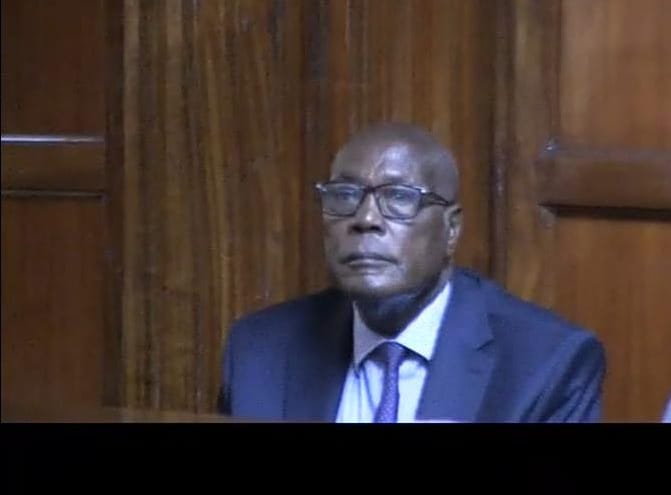
They argued that the lower court had already addressed the issues raised in the application. They also urged the court to allow the criminal proceedings to reach their conclusion.
Complainants oppose the application
During submissions before Justice Alexander Muteti, counsel for the complainants argued that the judicial review application was improperly before the court.
The lawyer said the application sought to derail a criminal trial that had already reached an advanced stage.
Counsel maintained that although Chelogoi relied on constitutional provisions and sought judicial review remedies, the dispute arose from an ongoing criminal trial. He argued that the trial court should resolve the issues within the existing proceedings.
“I still maintain that these are judicial review proceedings,” counsel submitted.
Lawyers accuse Chelogoi of forum shopping
The complainants told the court that Chelogoi had previously challenged aspects of the criminal proceedings and had already received relief from different courts.
They argued that he returned to the High Court even though other legal options, including criminal revision proceedings, remained available.
Counsel also accused Chelogoi of forum shopping by filing similar issues before different divisions of the High Court.
According to the complainants, the lower court had already considered many of the issues raised in the latest application. Other issues had formed part of earlier litigation involving the same criminal case.
Criminal trial nears completion
The complainants argued that the Ksh1.3 billion land case had progressed significantly.
They told the court that the prosecution had already closed its case and the accused persons had entered their defence.
Counsel argued that stopping the trial at this stage would delay justice and prolong a dispute that has remained before the courts for years.
Court questions constitutional Jurisdiction
Counsel defended the jurisdiction of the Constitutional and Human Rights Division under Article 23 of the Constitution.
However, he argued that Chelogoi had wrongly framed the current application as a constitutional matter.
He submitted that dissatisfaction with lower court decisions does not automatically turn a criminal dispute into a constitutional case.
The lawyer also told the court that many litigants seek constitutional orders affecting criminal proceedings. He argued that such applications should not automatically halt ongoing trials.
Judge raises key questions
Justice Alexander Muteti asked whether the High Court could still exercise its constitutional jurisdiction when alleged violations of rights arise during criminal proceedings.
Counsel maintained that the application should be struck out.
“Whether I am right or wrong, I still maintain that these are judicial review proceedings,” he told the court.
High court to deliver Judgment
The complainants urged the High Court to allow the trial court to conclude the Ksh1.3 billion land case, saying that doing so would best serve the interests of justice.
Chelogoi argues that the trial court violated his right to a fair hearing. He also challenges the jurisdiction of the magistrate who handled parts of the case after her transfer to another station.
The High Court will decide whether to hear the application or allow the criminal proceedings to continue before the trial court.
Justice Muteti is expected to deliver judgment at the end of July.

